

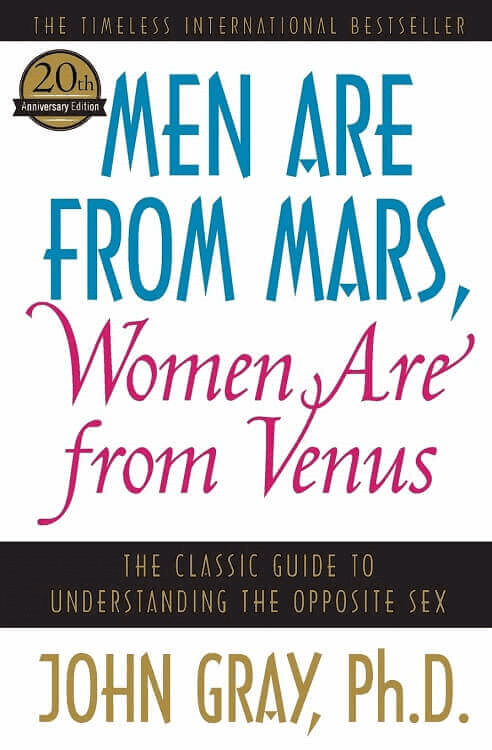
Men Are From Mars, Women Are From Venus was the ‘90s dating staple—funny, catchy, and everywhere. The big idea: men and women often communicate differently, and if you get that, dating gets easier. That message still helps, but today we know the Mars/Venus metaphor can over-generalize and miss how much overlap there really is between people. Think of it less as biology, more as habits and context—useful cues, not cosmic law.
TL;DR
- The core lesson—listen first, fix later—still works; just apply it person-to-person, not gender-to-gender.
- “Rubber bands & caves” = some people need space under stress; agree on signals and timing.
- “Score points” lists? Keep the spirit (thoughtfulness), ditch the scripts—especially in today’s app-driven dating scene.
- Writing it out still helps—try calm, time-boxed messages before talking.
- Quick, kind follow-through within 24 hours and small, consistent “micro-romance” gestures beat grand moves.
Dude Hack Exclusive Offers



What Is The Book About?
As discussed, this dating guide has a quirky premise. And yet, Men Are From Mars, Women Are From Venus gives some good advice on how to deal with communication when you and your partner have different ways of expressing themselves. It also encourages its readers to listen to one another, which can’t be a bad thing.
Martians, apparently, spied the Venetians one day and just had to go get them. These mismatched beings must learn to communicate—but it takes work. Perhaps it isn’t the most sensitive way to view relationships, but author John Gray manages some nuggets of truth (and decent advice) in his space-age tale. The book was aimed at Gen X daters and became a pop-culture touchstone upon publication in 1992.

Dating Lesson One: Communication Styles Differ
This book takes its central metaphor seriously. Men are Martians, women are Venusians. That’s pretty wild—but John Gray makes some interesting points with it. He explains that men value power, competency, efficiency, and achievement; women often value connection and emotional sharing. The moral? Men try to fix problems while women want to talk them out. While there are deeply gendered assumptions here, there’s a central truth: people communicate differently, and active listening solves most issues.
If you are a Martian (read: a dude) then try to spend more time just listening. Ask what your partner needs if you’re unsure. On a date, don’t monopolize the conversation or assume your date needs help—they did just fine before you showed up. After a good date, send a simple, specific follow-up within 24 hours. Timely, warm messages show genuine interest and increase your chance of a second date.

Dating Lesson Two: Rubber Bands And Caves
Okay… did this book invent the tradition of the man cave? The “rubber band” theory means some people need space when stressed, while others process by talking it through. The old idea was that men withdraw (“go to their cave”) and women vent—but it’s really just different coping styles. Agree on signals, timing, and boundaries so space-takers don’t disappear and talkers feel heard.

Try to understand how your partner handles pressure. If they need space, give it. If they joke through discomfort, let them. And if you process emotions by talking, communicate that clearly. This awareness helps even in early dating stages.

Dating Lesson Three: 101 Ways To Score Points With A Woman
Yeah, this one is exactly what it sounds like. It’s some 101-level dating advice. It isn’t that the tips are terrible—just basic and very ‘90s. They include opening doors, asking questions, planning dates ahead, and giving compliments. Basically, communicate and be thoughtful.
Planning a date in advance and showing genuine interest are timeless moves. In 2025, thoughtfulness also means safety and clarity—pick public venues, confirm plans, and use app verification tools when available.

Apply this advice carefully. Don’t turn it into a checklist to “win points.” Authenticity matters. Instead, focus on “micro-romance”—small, consistent gestures like remembering a coffee order or sending a kind check-in. It’s about showing care, not performance.

Dating Lesson Four: Write Down Your Feelings
There are exercises in the book, and this one’s actually great. Writing letters—honest ones, not just positive—helps you think through your emotions and express them clearly. Instead of arguing, you can write out your frustrations and appreciation, then let your partner respond.
Today, we can do this digitally—through a long message or note—but the principle’s the same: take time before reacting. Try a time-boxed exchange (10–15 minutes each), then switch to voice or in-person conversation. It’s a modern way to cool down and connect.

The Main Dating Advice in Men Are From Mars, Women Are From Venus
Listen. That’s it. Listen to what your date or partner wants and needs. Communicate. Be yourself.
John Gray wrote the book after a personal wake-up call from his wife, Bonnie—who simply needed him to listen. The moral hasn’t changed: connection comes from empathy, not assumptions.
In 2025, communication tools are endless—texting, video calls, apps—but listening remains the foundation of healthy relationships.

FAQ
Is the Mars/Venus idea still valid?
Partly. It’s a memorable story about different communication styles, but modern research shows people vary individually. Use it as a guide, not a rule.
How fast should I text after a great date?
Within 24 hours. A simple, genuine message referencing something specific from the date shows interest and confidence.
What’s a 2025-approved romantic gesture?
“Micro-romance” wins—small, consistent acts of kindness and clear communication beat big, dramatic gestures.
Are dating apps safer in 2025?
Yes, most major apps have stronger verification and anti-scam features now. Always use safety tools and meet in public.
Does this book apply to LGBTQ+ dating?
Yes, the communication lessons apply to everyone. Just skip the gender labels and focus on emotional awareness and respect.
What’s one fix if we keep talking past each other?
Try a “repair ritual”: 10 minutes of uninterrupted listening, summarize what you heard, then decide whether the other person wants advice or empathy before responding.
